Taking Back Control After Workplace Sexual Harassment in Southern California
Key Takeaways: If you were sexually harassed at work in Los Angeles, document every incident in detail, report the conduct through your employer’s HR process in writing, preserve evidence outside company systems, and consult an employment attorney before deadlines pass. California’s Fair Employment and Housing Act (FEHA) defines harassment broadly, covering hostile work environments where conduct is either severe or pervasive, even a single serious incident may qualify. Before suing, you must generally file a complaint with the Civil Rights Department (CRD) and obtain a right-to-sue notice. Assembly Bill 9 extended the administrative complaint deadline from one to three years, though after a right-to-sue notice you have only one year to file suit. FEHA’s harassment protections extend to all workplaces, including independent contractors and single-employee employers, and are generally more protective than federal law.
If you were sexually harassed at work in Los Angeles, the most important steps are to document what happened, report it through proper channels, preserve your evidence, and speak with an employment attorney before critical deadlines pass. California law gives harassed workers strong protections, and acting thoughtfully after an incident can protect both your job and your ability to recover compensation. This guide explains what to do, what makes a claim viable, and how the process works under the Fair Employment and Housing Act (FEHA).
If you are unsure whether what happened crosses the legal line, you do not have to figure it out alone. The team at Moore Ruddell LLP helps Southern California employees understand their rights. Call our office at (310) 792-7010 or reach out through our confidential contact form to schedule a free consultation.
What Legally Counts as Sexual Harassment in California?
California defines sexual harassment broadly. Under state law, it includes unwanted sexual advances or visual, verbal, or physical conduct of a sexual nature, and can include gender-based harassment of a person of the same sex as the harasser. Many workers experience actionable conduct without realizing it qualifies.
A hostile work environment is one common form. It exists when an employee is subjected to unwelcome conduct based on a protected characteristic that is sufficiently severe or pervasive to alter employment conditions and create an abusive working environment. Learn more about FEHA harassment claim standards that California courts apply.
Severe or Pervasive, Not Necessarily Both
A single serious incident can be enough, even if it never happened again. Conduct does not need to be both severe and pervasive, either can be sufficient. A single incident may qualify if severe enough, while repeated lesser conduct, such as ongoing suggestive comments, can also establish a viable claim.
💡 Pro Tip: Keep a private, dated log of each incident, noting what was said or done, who was present, and how it affected your work. Store it outside your work computer or email account.
Where Courts Draw the Line
California courts weigh the full context, not isolated snapshots. When evaluating claims, courts consider the totality of circumstances, including frequency, severity, whether conduct is physically threatening or humiliating, and whether it unreasonably interferes with work performance. FEHA focuses on the impact on the employee, not whether the harasser intended harm, so conduct dismissed as joking may still be unlawful.
FEHA is not a general civility code. The key issue is whether conduct is tied to a protected characteristic and meets the severity or pervasiveness threshold. General rudeness or personality conflicts without connection to sex or another protected trait usually will not support a claim.
What Should You Do First After Being Harassed?
Focus on safety, documentation, and following your employer’s reporting process. How you respond in the early stages can significantly strengthen or weaken a later claim. Take these practical actions:
- Write down every incident in detail while your memory is fresh, including dates, times, locations, and witnesses.
- Save relevant texts, emails, photos, or voicemails outside company systems.
- Report the conduct through your employer’s internal complaint or HR process, ideally in writing.
- Note any changes to your schedule, duties, pay, or treatment after you complain.
Reporting internally matters because employer liability under FEHA often turns on whether the company knew or should have known about the harassment and failed to take immediate and appropriate corrective action. Our guide on reporting sexual harassment California employees can follow walks through the process step by step.
💡 Pro Tip: If you fear retaliation, report in writing and keep a personal copy. A documented complaint creates a clear timeline that can be valuable if your employer later cuts your hours, demotes you, or fires you.
Coming forward can be painful, but emotional difficulty should not stop you from getting help. Reporting can be re-traumatizing, and California has recognized this reality by expanding deadlines. Still, avoid unnecessary delay.
How a Sexual Harassment Attorney in Los Angeles Can Help
A sexual harassment attorney in Los Angeles can evaluate your claim, protect you from retaliation, and pursue compensation for what you have suffered. Harassment cases often involve difficult questions about employer liability, evidence, and damages. This is especially important where a supervisor is involved or where you have already lost income.
Vulnerable workers particularly benefit from guidance. Low-paid employees are more likely to experience sexual harassment and feel job loss more acutely if retaliated against. Los Angeles, Riverside County, and San Bernardino County are home to large low-wage workforces where many workers do not know their rights until too late.
Why Experienced Litigation Counsel Matters
Viable harassment cases require careful development. A knowledgeable Los Angeles employment lawyer can assess whether your facts support a hostile work environment or quid pro quo claim, whether retaliation occurred, and what damages may be recoverable. Our attorneys handle employment cases with a trauma-informed, confidential approach. Learn how our sexual harassment attorney Los Angeles team supports clients throughout the region.
💡 Pro Tip: Awareness is protection. One EEOC report found that 25% of women said they experienced harassment when asked directly, but 60% did when asked about specific behaviors like suggestive comments or inappropriate touching.
Should You File With the CRD or Sue in Court?
In California, you generally must file a complaint with the Civil Rights Department (CRD) and obtain a right-to-sue notice before suing for harassment under FEHA. These are two separate tracks: an administrative complaint with a state agency and a civil lawsuit in court. The administrative process is a required step, subject to certain exceptions, before most FEHA lawsuits can proceed. Employees represented by counsel often request an immediate right-to-sue notice rather than wait for investigation.
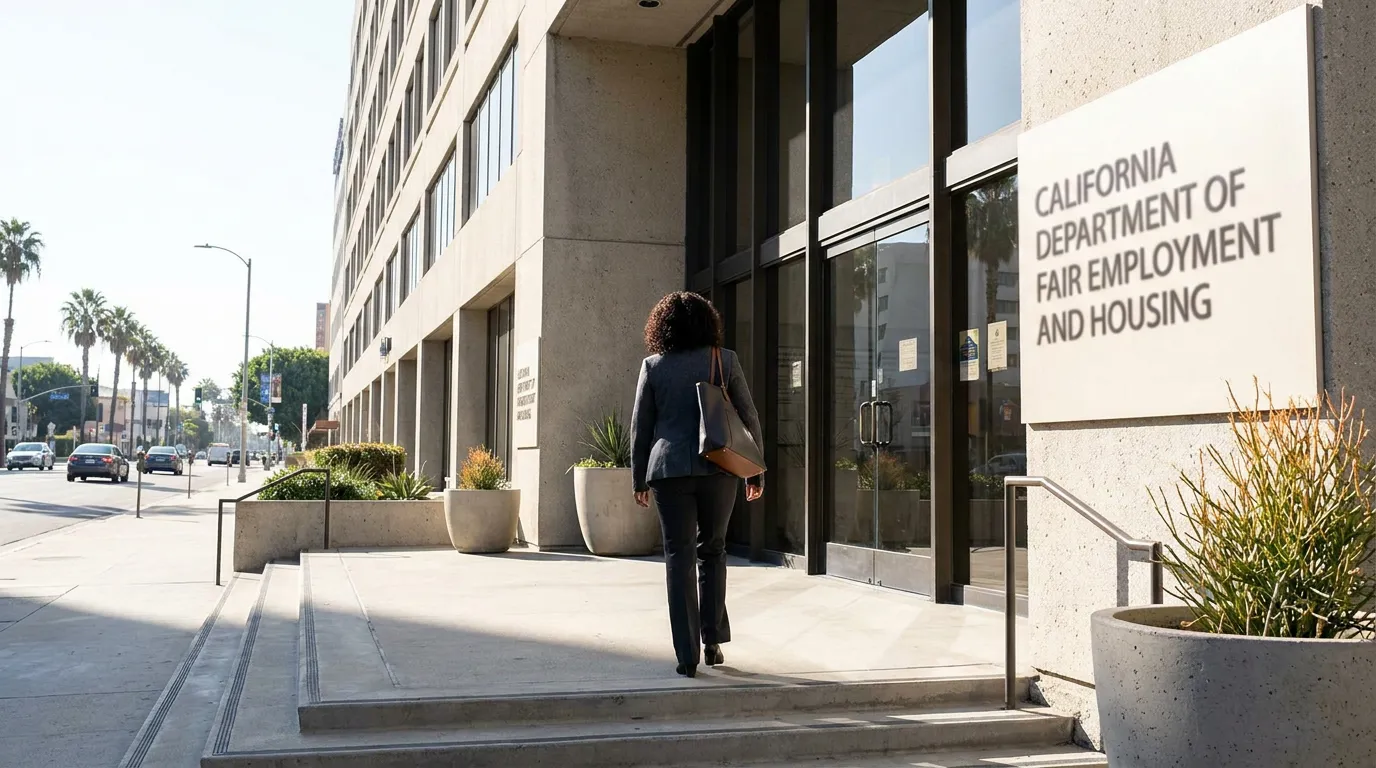
The CRD handles complaints involving discrimination or harassment based on FEHA-protected characteristics such as race, sex, religion, national origin, or disability. Begin the process through the CRD’s employment complaint resources online.
How the CRD Investigation Works
Once filed, the CRD investigates using formal tools. The filing individual is called a complainant and the employer a respondent. The CRD has authority to take interviews under oath, issue subpoenas and interrogatories, and seek temporary restraining orders. Through its Contact Center at 800-884-1684, the CRD can scribe your pre-complaint by phone for those with disabilities.
FEHA’s reach is broad. Employers of five or more are subject to FEHA’s prohibition against employment discrimination, and harassment is prohibited in all workplaces, even those with only one employee or independent contractor. California protections tend to be more generous than federal ones, FEHA is broadly construed and generally more protective than Title VII of the Civil Rights Act of 1964.
How Much Time Do You Have to Act?
California expanded the deadline for FEHA claims, but exceptions make early action essential. Under Assembly Bill 9, the filing deadline for FEHA claims extended from one year to three years, reducing barriers to reporting for victims of workplace sexual harassment and discrimination. This longer window applies to the administrative complaint with the CRD.
However, AB 9 did not revive claims that had already lapsed under the prior one-year rule, courts interpret tolling narrowly, and for ongoing harassment the clock generally runs from the last incident. The three-year deadline to file the administrative complaint and the separate one-year deadline to file a civil lawsuit after a right-to-sue notice are distinct. Treat any deadline as fact-sensitive and confirm it with an attorney.
| Path | What It Is | General Purpose |
|---|---|---|
| CRD administrative complaint | Filing with a state agency | Required step, subject to exceptions, before most FEHA suits |
| Civil lawsuit | Case filed in court | Seeks lost wages, emotional distress, and other damages |
💡 Pro Tip: Because civil and administrative deadlines run separately and can be shorter than expected, treat the earliest possible date as your target and consult counsel promptly.
Frequently Asked Questions
1. Do I have to be fired to have a sexual harassment claim?
No. A hostile work environment claim can exist while you are still employed. If you were demoted, had hours cut, or were terminated after complaining, that may support a separate retaliation claim under FEHA.
2. What if my harasser said it was just a joke?
Intent is not the deciding factor. FEHA focuses on the impact of conduct on the employee. What matters is whether the conduct was unwelcome, tied to a protected characteristic, and severe or pervasive.
3. Can a single incident be enough?
Yes. Conduct does not need to be both severe and pervasive, either can be sufficient. A single incident may qualify if severe enough, depending on the totality of circumstances.
4. Do I have to file with a government agency before suing?
Generally, yes. California employees usually must file a complaint with the Civil Rights Department and obtain a right-to-sue notice before pursuing most FEHA harassment or discrimination lawsuits in court. This administrative step is separate from your civil case and subject to certain exceptions.
5. Does California protect independent contractors and small-workplace employees?
Yes. Harassment is prohibited in all workplaces, even those with only one employee or independent contractor. Broader discrimination protections apply to employers with five or more employees.
Moving Forward With Confidence
Being sexually harassed at work is deeply personal, but California law is on your side. Document what happened, report through proper channels, preserve your evidence, and be mindful that deadlines depend on your specific situation. Because every case turns on its own facts, speaking with an attorney is the best way to understand your options.
You deserve to be heard. Reach out to our Southern California employment attorneys at Moore Ruddell LLP to discuss your situation in confidence. Call (310) 792-7010 or use our secure consultation request to schedule a free consultation today.