Why Timing Matters More Than Ever in California Retaliation Cases
Key Takeaways: California’s SB 497, effective January 1, 2024, created a rebuttable presumption of retaliation when an employer disciplines or discharges an employee within 90 days of protected activity under Labor Code §§ 98.6, 1102.5, and 1197.5. This shifts the burden to the employer to show a legitimate, independent reason rather than requiring the employee to prove retaliatory motive from the outset. The presumption is procedural, not a guaranteed win, and claims outside the 90-day window remain actionable through circumstantial evidence. Remedies can include lost wages, reinstatement, emotional distress damages, attorney’s fees, and civil penalties up to $10,000 per violation. Early evidence preservation and legal assessment are critical.
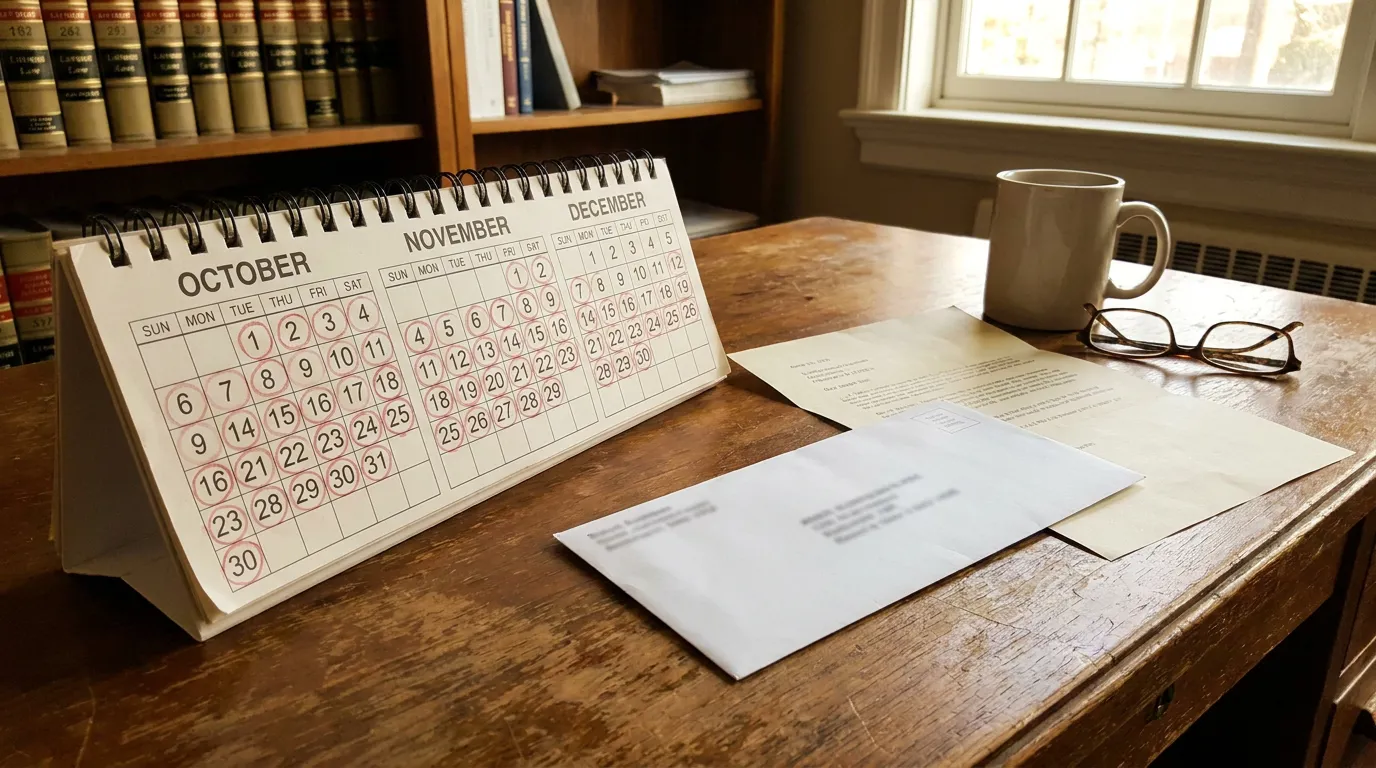
If your employer disciplined, demoted, or fired you within 90 days of reporting something unlawful, California law now presumes that action was retaliatory unless the employer proves otherwise. Senate Bill 497 shifted a burden that previously fell almost entirely on employees. Under the amended labor code 1102.5 retaliation California framework, the employer must justify its decision with a legitimate, independent reason.
If you were disciplined or terminated shortly after speaking up, timing and evidence both matter. Evidence fades, witnesses leave, and documents get overwritten. Moore Ruddell LLP represents employees across Southern California in retaliation and whistleblower litigation. Request a confidential case review or call (310) 792-7010 to discuss your situation.
What Does Labor Code § 1102.5 Actually Protect?
California Labor Code § 1102.5 is the state’s core whistleblower statute, protecting far more conduct than most employees realize. It prohibits retaliation against employees who disclose information they reasonably believe shows a violation of state or federal statute, or local, state, or federal rule or regulation. Disclosures may be internal to a supervisor or employee with authority to investigate, or external to a government or law enforcement agency.
The statute also protects refusal. Under § 1102.5(c), employees who refuse to participate in activity that would violate law are protected, even without filing a formal complaint. This matters for employees pressured to falsify records, ignore safety rules, or cover up billing irregularities.
Employees in Los Angeles, Riverside County, and San Bernardino County often assume whistleblower protection only covers dramatic fraud cases. It does not. Reporting wage theft, unsafe warehouse conditions, or a supervisor’s harassment can all qualify. Whether a report qualifies depends on what you said, to whom, and whether you had reasonable cause to believe the conduct was unlawful.
How the 90-Day Rule Changed Retaliation Claims Under SB 497
SB 497, the Equal Pay and Anti-Retaliation Protection Act, was signed October 8, 2023 and took effect January 1, 2024. It amended California Labor Code §§ 98.6, 1102.5, and 1197.5 to create a rebuttable presumption of retaliation when an employer engages in any action prohibited by those provisions within 90 days of protected activity. A new law easing retaliation claims is how practitioners described the change. The amendments apply prospectively to adverse actions taken on or after January 1, 2024.
The three amended sections cover different but overlapping protected activity:
| Statute | Protected Activity Covered |
|---|---|
| Labor Code § 98.6 | Complaints to the Labor Commissioner; exercising Labor Code rights |
| Labor Code § 1102.5 | Whistleblower disclosures; refusing to participate in unlawful conduct |
| Labor Code § 1197.5 | Equal Pay Act activity, including wage discussions and inquiries |
State Senator Lola Smallwood-Cuevas argued the reform was necessary because fear of retaliation keeps workers silent. Supporters contended retaliation claims were difficult to sustain because workers carried the initial causation burden. Employer groups, including the California Chamber of Commerce, opposed the measure, arguing courts already weighed timing and that a presumption would allow weak claims to proceed.
Understanding Burden Shifting in Labor Code 1102.5 Retaliation California Claims
The presumption changes who has to explain themselves first. Once you show protected activity and an adverse action within the 90-day window, the presumption operates in your favor. The employer may rebut it by proving a legitimate, independent reason under the applicable standard.
What counts as an adverse employment action?
An adverse action is broader than termination:
- Termination, constructive discharge, or forced resignation
- Demotion, suspension, or reduction in hours or pay
- Reassignment to a materially less desirable position or shift
- Written discipline that meaningfully affects advancement
- Threats of discharge or discipline tied to protected activity
The SB 497 presumption broadly covers the full range of adverse employment actions prohibited by the relevant Labor Code provisions, not just termination or formal discipline.
How does the burden-shifting framework work in practice?
California uses a contributing-factor standard rather than a but-for standard in § 1102.5 cases. Under Labor Code § 1102.6, as confirmed in Lawson v. PPG Architectural Finishes (2022), once an employee shows by a preponderance that protected activity was a contributing factor, the burden shifts to the employer to demonstrate by clear and convincing evidence that it would have taken the same action for legitimate, independent reasons. That is a demanding standard, and documentation matters significantly.
Why does this framework favor prepared plaintiffs?
A presumption is only as strong as the proof supporting the trigger. You must establish that you engaged in protected activity, that the employer knew about it, and that the adverse action fell within the window. Employers frequently respond with performance documentation created after the complaint. If you are weighing whether whistleblowers are protected in California, early legal assessment produces better evidence preservation.
💡 Pro Tip: Write down your timeline the week you are disciplined. Note the date of every complaint, who you told, and the date of each adverse action. Contemporaneous notes are more persuasive than reconstructed memory.
What Happens If the Adverse Action Falls Outside 90 Days?
Missing the 90-day window does not end your claim, it removes a procedural advantage. Retaliation occurring four, six, or twelve months after a complaint remains unlawful under Labor Code § 1102.5, provided the claim is brought within the applicable limitations period. You carry the ordinary § 1102.6 burden of showing protected activity was a contributing factor through other proof.
Courts consider circumstantial evidence in these cases. Shifting or inconsistent explanations, sudden negative reviews after years of positive ones, deviations from progressive discipline policy, and disparate treatment of employees who never complained can all support causation. Timing is powerful evidence but has never been the only evidence.
Employers sometimes wait deliberately. Some organizations delay adverse action to distance it from the complaint, then build a paper trail in the interim. That pattern is often visible in documents, which is why preserving emails, texts, performance reviews, and personnel file records early can be decisive.
What Remedies and Penalties Apply Under the Amended Statutes?
Employees who prevail on retaliation claims may recover statutory and common law remedies, subject to the facts and causes of action pleaded. These can include lost wages and benefits, reinstatement, emotional distress damages, and attorney’s fees where authorized. Section 1102.5 contains a fee-shifting provision authorizing courts to award reasonable attorney’s fees to a prevailing plaintiff who brings a successful action for a violation of the statute, a provision added by AB 1947 effective January 1, 2021. Punitive damages may be available where the employer’s conduct meets the standard of Civil Code § 3294.
The amendments carry enforcement teeth. Labor Code §§ 98.6 and 1102.5 authorize a civil penalty of up to $10,000 per employee per violation, awarded to the employee. Commentators reviewing the rebuttable presumption for public agencies have noted this penalty exposure as a meaningful deterrent.
Public employees follow a different track. The California Whistleblower Protection Act, Gov. Code §§ 8547 through 8547.15, protects state employees who report improper governmental activity and generally requires a written complaint to the State Personnel Board before a civil action for damages may proceed.
How Do Whistleblower Claims Interact with FEHA and Wrongful Termination?
Retaliation claims frequently travel with other causes of action, and procedural requirements differ. If your complaint involved harassment or discrimination based on a protected characteristic, the Fair Employment and Housing Act applies, and California employees generally must file with the Civil Rights Department and obtain a right-to-sue notice before filing suit, typically within three years. Labor Code § 1102.5 claims do not carry that exhaustion requirement.
Wrongful termination in violation of public policy, often called a Tameny claim, is a separate cause of action that can be pleaded alongside a statutory retaliation claim when termination violates a fundamental public policy grounded in a constitutional or statutory provision.
Deadlines vary by claim type and are not interchangeable. Civil statutes of limitations, administrative filing deadlines with the CRD, and government claim requirements for public entity employers each operate on separate timelines. If you are evaluating an employee retaliation claim lawyer consultation, doing so early protects against deadline problems that cannot be fixed later.
💡 Pro Tip: Do not sign a severance agreement or general release before understanding what claims you may be giving up. Releases are frequently broader than employees expect.
Frequently Asked Questions
1. Does the 90-day presumption guarantee I will win my retaliation case?
No. The presumption is rebuttable, meaning your employer may overcome it by proving a legitimate, independent reason under the applicable standard. The outcome depends on evidence, witness credibility, and how a judge or jury weighs the employer’s explanation.
2. Do I have to report to a government agency to be protected?
Generally, no. Labor Code § 1102.5 protects internal disclosures made to a supervisor or another employee with authority to investigate, as well as reports to government agencies. What matters is whether you had reasonable cause to believe the information disclosed showed a violation.
3. What if I was wrong about the law I thought was being broken?
You may still be protected. The statute focuses on whether you had reasonable cause to believe a violation occurred, not whether a violation was ultimately proven. Courts examine what a reasonable employee in your position would have believed based on available information.
4. How soon should I talk to an attorney after being disciplined?
As soon as practical. Evidence preservation, personnel file requests, and deadline analysis are all time-sensitive, and a California employment attorney can help identify what documentation matters before it disappears.
Where This Leaves California Employees Who Spoke Up
The 90-day presumption created by SB 497 is one of the more meaningful shifts in California retaliation law in years. It reflects a legislative judgment that discipline landing weeks after a protected complaint warrants closer scrutiny. Still, the presumption is a starting point rather than a finish line, and viable claims are built on documentation, timelines, witnesses, and a clear understanding of which statutes apply. Every case turns on its own record.
If you reported unlawful conduct and your employer responded with discipline, demotion, or termination, Moore Ruddell LLP is prepared to evaluate whether the 90-day presumption and California’s whistleblower protections apply to your circumstances. Reach out to our Southern California employment attorneys by calling (310) 792-7010 or schedule a free consultation with our team today.